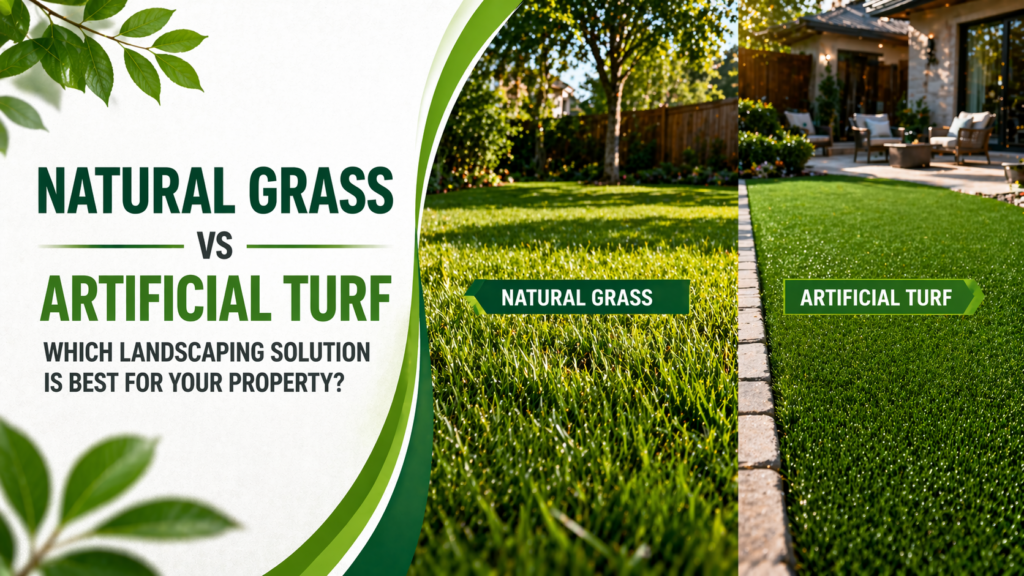
When it comes to transforming your outdoor space, one decision stands above the rest — choosing between natural grass and artificial turf. Homeowners, property managers, and landscape designers across the country are weighing this choice carefully. Each option brings a unique set of benefits, drawbacks, and long-term implications that can significantly shape the look, feel, and function of your property.
This comprehensive guide breaks down every angle of the natural grass vs artificial turf debate to help you make a confident, well-informed decision.
Understanding the Basics: What Are You Choosing Between?
Before diving into comparisons, it helps to understand what each option actually involves.
Natural grass is a living lawn composed of grass species such as Bermuda, Zoysia, St. Augustine, or Kentucky Bluegrass. It grows from soil, requires regular maintenance, and responds dynamically to seasons and climate.
Artificial turf, also called synthetic turf, is a manufactured surface made from synthetic fibres — typically polyethylene or polypropylene — designed to replicate the appearance and texture of real grass. Initially developed for sports stadiums, it has expanded widely into residential landscaping, commercial properties, and recreational areas.
Both are legitimate lawn solutions, but they serve different lifestyles, climates, and budgets.
Cost Comparison: Upfront vs Long-Term Investment
Natural Grass
Natural grass generally has a lower upfront installation cost. Seeding a lawn can cost as little as ₹15–₹40 per square foot (or $0.15–$0.35/sq ft in the US), while sod installation runs higher. However, the long-term costs accumulate quickly — water bills, fertilisers, pesticides, lawn mowing services, aeration, and reseeding add up year after year.
Over a 10-year period, the recurring maintenance cost of a natural lawn can significantly exceed the initial investment.
Artificial Turf
Turf installation typically costs more upfront — ranging from ₹250–₹800 per square foot depending on quality, region, and the complexity of the project. However, once installed, the ongoing expenses drop dramatically. No watering, no mowing, no fertilising.
Most premium synthetic turf products carry a lifespan of 15–25 years with minimal upkeep, making it a sound long-term investment for properties where low maintenance landscaping is a priority.
If you’re thinking long-term, artificial turf often delivers a better return on investment — especially in regions with high water costs or drought restrictions.
Maintenance Requirements: How Much Time and Effort Are You Willing to Invest?
Natural Grass Maintenance
Maintaining a natural lawn is an ongoing commitment. Key tasks include:
- Mowing at least once a week during growing seasons
- Watering 1–1.5 inches per week (more in hot or dry climates)
- Fertilising 4–6 times per year
- Controlling weeds, pests, and fungal diseases
- Aerating and dethatching annually
- Overseeding bare or thinning patches
This level of care demands both time and money. For busy homeowners or property managers handling multiple sites, it can become a significant operational burden.
Synthetic Turf Maintenance
Artificial turf is not entirely maintenance-free, but it comes remarkably close. Routine tasks include:
- Brushing the blades periodically to keep them upright
- Rinsing with water to remove dust, pet waste, or debris
- Inspecting drainage systems every few months
- Removing fallen leaves or organic material
There is no mowing, no watering schedule, and similarly, no fertilizer required. Therefore, for anyone seeking low-maintenance landscaping without sacrificing visual appeal, synthetic turf is an excellent option. Ultimately, it provides a pristine look with minimal effort.
Environmental Impact: Which Option Is Greener?
This is one of the most debated aspects of the natural grass vs artificial turf conversation.
Environmental Benefits of Natural Grass
Natural grass provides genuine ecological value. It:
- Absorbs carbon dioxide and releases oxygen
- Reduces surface temperatures through evaporative cooling
- Filters rainwater and supports groundwater recharge
- Provides habitat for insects, birds, and microorganisms
- Contributes to soil health and biodiversity
A healthy natural lawn can act as a small but meaningful carbon sink and play a role in local ecosystem balance.
Environmental Concerns with Artificial Turf
Synthetic turf has faced criticism on environmental grounds. Key concerns include:
- Made from non-biodegradable petroleum-based plastics
- Retains significantly more heat than natural grass (surface temperatures can spike 20–50°C above ambient in direct sunlight)
- Does not support soil biology or biodiversity
- May involve rubber infill materials (crumb rubber) that raise health and leaching concerns
However, the environmental picture is not entirely negative. Artificial turf eliminates the need for lawn chemicals that can contaminate waterways, and it conserves water — a major advantage in drought-affected regions.
The Water Factor
In areas facing water restrictions, turf installation can reduce outdoor water usage by up to 55–70%. Therefore, this presents a compelling environmental argument in regions where water scarcity is a pressing issue. In fact, some municipalities even offer rebates for homeowners who replace natural grass with synthetic alternatives specifically to conserve municipal water.
Aesthetics and Appearance: Which Looks Better?
This is ultimately subjective, but worth addressing honestly.
Natural grass has an organic beauty that is difficult to replicate. The varying textures, seasonal colour shifts, the smell of fresh-cut grass, and the cool, barefoot feel underfoot are sensory experiences no synthetic product can fully match.
Modern synthetic turf, however, has come a long way. Today’s premium products feature varied blade heights, multi-tone colouring, realistic textures, and natural-looking patterns that closely mimic real grass. Many homeowners find it difficult to distinguish high-quality artificial turf from real grass at a glance.
For properties where a perfectly manicured, year-round green appearance is desired — regardless of season, rainfall, or foot traffic — artificial turf delivers consistent results that natural grass simply cannot guarantee.
Durability and Performance Under Pressure
High-Traffic Areas
Natural grass often struggles under heavy use. For instance, play areas, dog runs, and pathways can quickly become patchy or muddy. As a result, these frequently used garden spaces often become compacted, requiring constant rehabilitation.
Artificial turf is engineered specifically for durability. Consequently, for family homes with active children or pets, or commercial properties with heavy visitor flow, synthetic turf holds its form reliably. Furthermore, it maintains its appearance regardless of high foot traffic.
Climate and Seasonal Performance
Natural grass is climate-dependent. It can brown or go dormant in drought, freeze in winter, and take weeks or months to recover from stress. Warm-season grasses thrive in hot climates but struggle in cold; cool-season varieties behave oppositely.
Artificial turf performs consistently across climates. Whether it’s a dry summer or a wet winter, synthetic surfaces remain green, usable, and visually intact year-round.
Pet and Child Safety Considerations
Natural Grass
Natural lawns are generally safe for pets and children, though the use of pesticides, herbicides, and chemical fertilisers introduces risks. Pets that ingest treated grass or dig in chemically-treated soil can experience health issues. Muddy conditions after rain can lead to mess indoors and potential skin irritation for sensitive pets.
Artificial Turf
Modern synthetic turf products designed for residential use are typically tested for lead content, heavy metals, and allergens. Moreover, pet-specific artificial turf is often engineered with antimicrobial properties. Additionally, it features enhanced drainage to quickly disperse urine so that odor buildup is prevented.
The heat retention issue is worth noting for pets — during peak summer sun, synthetic surfaces can become uncomfortably hot for paws. Shading the area or choosing lighter-coloured, heat-reducing turf products mitigates this concern.
Turf Installation: What Does the Process Involve?
Professional turf installation is a multi-step process that determines the long-term performance of your synthetic lawn.
- Site excavation — Existing grass and topsoil are removed to the required depth
- Base preparation — A crushed aggregate base (compacted road base or decomposed granite) is installed to ensure drainage and stability
- Weed barrier — A permeable landscape fabric is laid to prevent weed growth
- Turf laying — The synthetic turf rolls are cut to fit and secured at the edges
- Infill application — Silica sand, crumb rubber, or organic infill is brushed in to support blade upright position and cushioning
- Finishing — Edges are trimmed, seams are secured, and the surface is brushed for a natural finish
Choosing a qualified, experienced installer is critical. Poor installation leads to drainage issues, visible seams, uneven surfaces, and premature wear.
Which Is Right for Your Property? Key Decision Factors
There is no single correct answer in the natural grass vs artificial turf debate. The right choice depends on your specific circumstances.
Choose natural grass if:
- You live in a region with adequate rainfall and moderate temperatures
- You enjoy gardening and outdoor maintenance
- Supporting local biodiversity and soil health is important to you
- You have a limited upfront budget
- You prefer the natural sensory experience of a real lawn
Choose artificial turf if:
- You want a low maintenance landscaping solution with minimal ongoing effort
- Water conservation is a priority in your region
- Your space experiences heavy foot traffic from children, pets, or guests
- You want a consistently pristine appearance year-round
- You manage commercial property, sports facilities, or rental spaces
- Your budget allows for a higher upfront turf installation cost
A Quick Comparison at a Glance
| Factor | Natural Grass | Artificial Turf |
| Upfront Cost | Lower | Higher |
| Long-term Cost | Higher | Lower |
| Maintenance | High | Very Low |
| Water Usage | High | Near Zero |
| Lifespan | Ongoing | 15–25 Years |
| Environmental Value | High (biodiversity) | Mixed |
| Durability | Moderate | High |
| Year-round Appearance | Variable | Consistent |
| Heat Retention | Low | High |
| Pet-Friendliness | Good (without chemicals) | Good (pet-grade turf) |
Final Thoughts
The natural grass vs artificial turf decision is not simply about appearance — it’s about aligning your landscaping choice with your lifestyle, climate, maintenance capacity, environmental values, and budget. Both options are valid and capable of producing beautiful, functional outdoor spaces.
Natural grass offers ecological richness, natural beauty, and a living landscape that changes with the seasons. Synthetic turf delivers unmatched durability, water savings, and a consistently attractive appearance with minimal upkeep.
Take time to consult with a qualified landscaping professional who can assess your site, usage requirements, and climate before making your final decision.
Frequently Asked Questions
1. How long does artificial turf last before it needs replacement?
High-quality synthetic turf typically lasts between 15 and 25 years, depending on foot traffic, UV exposure, and maintenance. Leading manufacturers offer warranties ranging from 8 to 15 years. Regular brushing and occasional rinsing can significantly extend the surface’s usable life.
2. Does artificial turf get too hot for children and pets during summer?
Synthetic turf can absorb and retain heat, with surface temperatures rising notably in direct sunlight. Watering the surface briefly or installing shade structures helps cool it down quickly during peak heat periods.
3. Is artificial turf safe for the environment?
It depends on the perspective. However, it is made from non-biodegradable materials and doesn’t support biodiversity. Recycling programs for end-of-life turf are improving, but disposal remains a challenge.
4. Does natural grass add more property value than artificial turf?
Both can add value, but it depends on the buyer demographic and region. In water-scarce areas, a well-installed synthetic turf lawn is increasingly attractive to buyers due to low maintenance and low water costs. In regions with lush climates, a thriving natural lawn may be more appealing. The quality of installation and overall presentation matters significantly in both cases.
5. How often does synthetic turf need to be cleaned?
For most residential properties, a light rinse every few weeks and brushing every 1–2 months is sufficient. However, pet owners may need to rinse more frequently to prevent odor buildup. Furthermore, occasional deep cleaning with a mild detergent once or twice a year keeps the surface both hygienic and fresh.
6. Which is better for regions with water restrictions — natural grass or synthetic turf?
Natural grass, by contrast, needs consistent watering to survive, and may be prohibited during water restriction periods — leading to brown, patchy, or dead lawns.