Your outdoor space is more than a yard — it is an extension of your home, your personality, and your lifestyle. Yet many homeowners overlook its potential, settling for patchy grass and a few random plants instead of a well-thought-out design. That is precisely where professional landscape design services come in.
Whether you own a compact urban garden or a sprawling suburban property, the right approach to outdoor space design can completely transform how you live, relax, and entertain outdoors. From the initial concept to the final planted bed, a skilled landscape designer brings together aesthetics, function, and ecology in one cohesive plan.
In this guide, we break down everything you need to know about landscape design services — what they include, why they matter, and how to choose the right professional for your project.
What Are Landscape Design Services?
Landscape design services refer to the professional planning, design, and management of outdoor spaces. These services go far beyond simply planting flowers or laying turf. A comprehensive landscape design service covers the full spectrum of outdoor space design — from conceptual sketches and garden layout planning to plant selection, hardscape installation, lighting, irrigation, and ongoing maintenance.
Think of it as interior design but for the outdoors. Just as an interior designer considers traffic flow, light, materials, and mood inside your home, a landscape designer applies similar principles to your garden, driveway, backyard, patio, or commercial grounds.
Professionals in this field typically offer services such as:
• Site analysis and soil assessment
• Conceptual design and 2D/3D landscape planning
• Custom landscape design tailored to your brief
• Planting plans and plant selection
• Hardscape design — paths, patios, walls, and pergolas
• Water features, drainage, and irrigation systems
• Outdoor lighting design
• Project management and contractor coordination
• Seasonal maintenance programs
Each of these elements contributes to a finished outdoor space that is both beautiful and practical.
Why Invest in Professional Landscape Planning?
Many people attempt DIY landscaping to save money, only to find themselves overwhelmed by decisions, incorrect plant choices, poor drainage, or designs that simply do not come together. Professional landscape planning removes the guesswork and replaces it with expertise.
1. Long-Term Cost Savings
A well-executed landscape plan reduces future expenses. Properly placed plants thrive without excessive watering or replacement. Good drainage solutions prevent costly water damage to structures. Strategic planting and hardscaping also increase your property’s value — studies consistently show that professional outdoor space design can boost home value by 10 to 15 percent.
2. Personalised Design for Your Lifestyle
Not every garden serves the same purpose. A family with young children needs open, safe play areas. A retiree may prefer low-maintenance planting with peaceful seating zones. A hospitality business requires a welcoming, brand-aligned exterior. Custom landscape design ensures that your outdoor space works for you specifically — not as a one-size-fits-all solution.
3. Environmental Responsibility
Thoughtful landscape planning considers local ecology, water conservation, and climate. A skilled designer will recommend drought-tolerant plants suited to your region, plan rainwater harvesting systems, and create habitats that support local wildlife. This approach benefits both your wallet and the environment.
4. Structural Expertise
Outdoor spaces involve more than pretty plants. Retaining walls must be structurally sound. Patios need appropriate drainage gradients. Underground irrigation systems require precise calculations. Professional landscape designers have the technical knowledge to handle all of this safely and legally, including relevant planning permissions where required.
Key Elements of Outdoor Space Design
A successful outdoor space design is composed of several interconnected elements. Understanding these helps you communicate clearly with your designer and set realistic expectations.
Hardscape vs. Softscape
Hardscape refers to the non-living structural elements of your garden — paths, patios, driveways, walls, fences, pergolas, and decking. Softscape refers to the living elements — plants, trees, shrubs, ground cover, lawn, and flowers. A balanced outdoor space design harmonises both, ensuring that hard surfaces do not overwhelm greenery and that plant growth does not compromise structural elements.
Garden Layout and Flow
Garden layout is one of the most critical decisions in any landscape project. It determines how people move through the space, how areas connect, and how the overall design feels from different vantage points. A thoughtful garden layout considers sightlines from inside the house, creates distinct zones — such as a dining area, a relaxation corner, and a kitchen garden — and uses pathways and plantings to guide visitors naturally through the space.
Poor garden layout is often the reason why DIY gardens feel disjointed or cluttered. A professional landscape designer will map out your space accurately, assess sun angles, wind direction, and soil zones before drafting any layout.
Plant Selection and Planting Design
Choosing the right plants is both a science and an art. Factors such as soil pH, drainage, aspect, frost risk, and seasonal variation all influence what will thrive in your garden. Beyond practicality, plants must also serve aesthetic goals — providing colour, texture, screening, fragrance, and seasonal interest throughout the year.
In professional landscape design services, planting plans are created with layering in mind: tall trees form the canopy, medium shrubs provide structure, perennials and grasses add texture, and ground-cover plants suppress weeds while filling gaps. This multi-layered approach creates a garden that looks full, natural, and alive in every season.
Water Features and Drainage
Water adds movement, sound, and reflection to an outdoor space. From simple birdbaths to elaborate koi ponds and contemporary water walls, water features can become the centrepiece of a garden design. Equally important, though less glamorous, is drainage. Poor drainage causes waterlogging, root rot, and structural damage. Professional landscape planning always addresses drainage before anything else is designed or installed.
Lighting
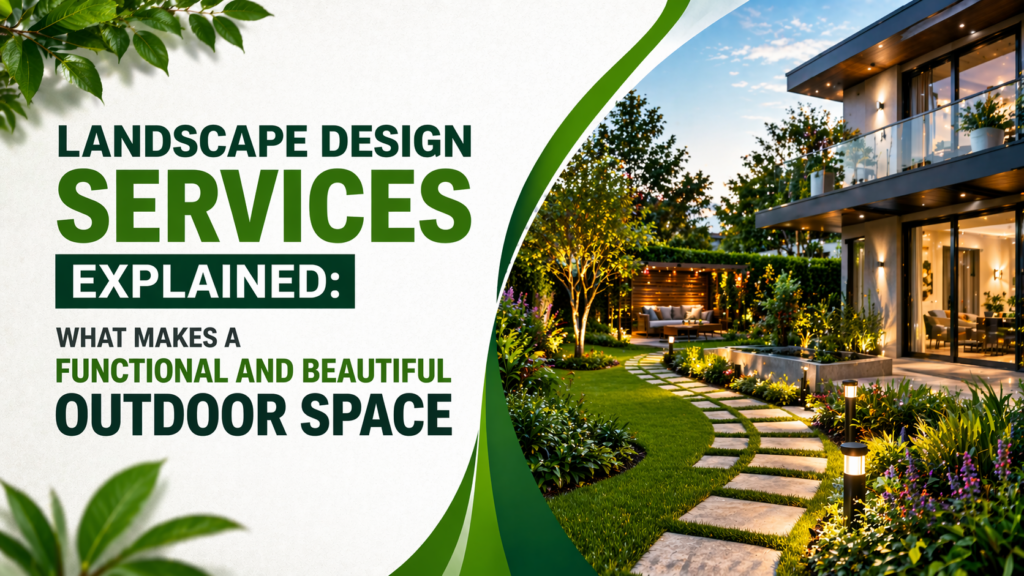
Outdoor lighting extends the usability of your space into the evening hours and dramatically enhances the appearance of your garden at night. Uplighting highlights specimen trees; path lighting improves safety; warm ambient lighting creates atmosphere on a terrace. A holistic landscape design service will include a lighting plan that is both functional and atmospheric.
The Landscape Design Process: Step by Step
Understanding the process helps homeowners and businesses know what to expect when engaging a landscape designer. Here is a typical workflow for professional landscape design services.
Step 1 — Initial Consultation
The process begins with a meeting between you and your designer. You will discuss your goals, lifestyle, aesthetic preferences, budget, and timeline. Bring photos of gardens you admire and be clear about how you want to use the space. This is also when your designer will ask practical questions about pets, children, allergies, and sustainability goals.
Step 2 — Site Survey and Analysis
Before any design work begins, your designer will conduct a thorough site survey. This includes measuring the space, assessing existing plants and structures, testing soil conditions, analysing sun and shade patterns, and identifying drainage issues. Accurate landscape planning starts with accurate site data.
Step 3 — Concept Design
Based on the survey and consultation, your designer will produce a concept design — often a hand-drawn or digitally produced sketch showing proposed zones, features, and planting areas. This is your opportunity to provide feedback before detailed design work begins.
Step 4 — Detailed Landscape Design
Once the concept is approved, the detailed custom landscape design phase begins. This produces construction drawings, planting plans, material schedules, and specification documents. These documents are precise enough for contractors to price and build from.
Step 5 — Implementation and Build
Some landscape designers manage the entire build process; others hand over drawings for you to manage. Larger projects typically benefit from designer oversight during construction to ensure the design intent is faithfully executed.
Step 6 — Aftercare and Maintenance
Many professional landscape design services offer aftercare programmes. These guide clients through the establishment period — the first two years when young plants are most vulnerable — and provide seasonal maintenance to keep the garden looking its best year-round.
Custom Landscape Design: Tailoring Every Detail
One of the greatest advantages of working with a professional is access to truly custom landscape design. Off-the-shelf garden solutions from garden centres or online platforms cannot account for the unique dimensions, aspect, soil profile, and personal preferences of your specific plot.
Custom landscape design considers everything: the exact dimensions of your site, the architecture of your home, your local climate conditions, your maintenance capacity, and your budget. It also allows you to incorporate unique features — a sunken fire pit, a sculptural planting scheme, a child-safe soft-surface play area, or a productive kitchen garden integrated seamlessly into the wider design.
The result is an outdoor space that feels like it was made for you — because it was.
Commercial vs. Residential Landscape Design Services
Landscape design services are not limited to private gardens. Commercial landscape design plays a vital role in the appeal, functionality, and sustainability of business premises, public parks, hospitality venues, housing developments, and institutional spaces.
Residential Landscape Design
For homeowners, outdoor space design focuses on creating personal retreats, family-friendly environments, productive gardens, and properties with strong kerb appeal. The scale is generally smaller, and the client relationship is more personal and collaborative.
Commercial Landscape Design
Commercial projects typically involve larger scales, stricter regulatory frameworks, higher footfall, and the need to balance aesthetics with durability and low maintenance. Businesses, developers, and public authorities rely on professional landscape planning to create environments that attract visitors, enhance brand image, and meet sustainability targets.
How to Choose the Right Landscape Design Service
Selecting the right landscape designer is as important as the design itself. Here are the key factors to consider.
• Portfolio and Experience — Review the designer’s previous work. Look for variety and quality in their portfolio.
• Specialisation — Some designers specialise in formal gardens, others in naturalistic planting or sustainable design. Choose someone whose expertise matches your vision.
• Qualifications — Look for relevant credentials such as a degree in landscape architecture or horticulture, membership in professional bodies, and insurance.
• Communication Style — A good designer listens carefully and communicates clearly. You should feel heard and informed throughout the process.
• Transparent Pricing — Professional landscape design services should provide clear fee structures. Be cautious of vague quotes or designs without detailed specifications.
• References — Ask for and contact previous clients. A reputable designer will welcome this.
• Local Knowledge — A designer familiar with your local climate, soils, and suppliers will deliver better results.
Trends Shaping Landscape Design Services Today
The world of outdoor space design is constantly evolving. Here are some of the most significant trends currently influencing landscape planning and garden design.
Biophilic Design
Biophilic design is the practice of connecting people more closely with nature through design. Specifically, in gardens and outdoor spaces, this translates into naturalistic planting and the use of natural materials. Furthermore, it involves the creation of spaces so that they attract birds, insects, and other wildlife.
Sustainable and Eco-Friendly Landscapes
Sustainability is no longer optional. Consequently, clients and designers alike are prioritizing rain gardens, permeable paving, and composting systems. In addition to these features, they are focusing on greywater recycling and native planting schemes in order to support local biodiversity. As a result, professional landscape design services increasingly incorporate sustainability as a core design principle.
Outdoor Living Spaces
The pandemic years accelerated the demand for outdoor living. Consequently, homeowners now invest heavily in well-equipped terraces, outdoor kitchens, and sheltered dining areas. In addition to these features, there is a focus on comfortable garden furniture zones. As a result, custom landscape design is increasingly integrating indoor-outdoor flow as a primary design priority.
Low-Maintenance Gardens
Busy lifestyles mean that many clients prioritise ease of upkeep. Designers are responding with thoughtfully planned planting schemes that look beautiful but require minimal intervention — using drought-tolerant species, smart irrigation, and mulching strategies to reduce ongoing workload.
Conclusion
A well-designed outdoor space is one of the most rewarding investments you can make in your home or business. Indeed, from the first site survey to the final planted border, professional landscape design services bring expertise, creativity, and technical knowledge to every stage of the process.
Furthermore, custom landscape design ensures that the result is uniquely yours. By reflecting your lifestyle and enhancing your property, it brings lasting joy every time you step outside.
So, are you ready to transform your outdoor space? If so, connect with a qualified landscape designer today and take the first step towards the garden you have always imagined.
Frequently Asked Questions
Q: How much do landscape design services cost?
A: Costs vary widely depending on the scope of the project, the size of the outdoor space, and the experience of the designer. A full custom landscape design for a large residential garden will cost more than a simple garden layout plan. Always request an itemised quote before committing.
Q: How long does the landscape planning process take?
A: The timeline depends on the complexity of the project. Larger, more complex projects can take several months, particularly if detailed construction drawings and multiple revision rounds are involved.
Q: Do I need planning permission for landscape changes?
A: In many cases, garden landscaping does not require formal planning permission. However, certain works — such as building high walls, installing large structures, or significantly altering drainage — may require consent depending on your local authority’s rules. A professional landscape designer will advise you on any permissions needed during the planning stage.
Q: Can landscape design services help with a small garden?
A: Absolutely. Professional outdoor space design can be transformative for small gardens. In fact, small spaces often benefit most from expert landscape planning, as every square metre must work harder. Clever use of vertical space, reflective surfaces, and compact planting can make a small garden feel significantly larger and more functional.
Q: What should I prepare before my first landscape design consultation?
A: Before meeting with a landscape designer, gather photos of outdoor spaces you admire, note down how you want to use your garden, think about your maintenance preferences, and have a realistic sense of your budget. It also helps to have the approximate dimensions of your property and any existing plans or surveys of the site.